How to Make Organic Potting Soil for Cannabis
Quick Organic Cannabis Soil Recipe
Here is a simple living soil recipe that works well for cannabis and most garden plants.
1 part coconut coir
1 part perlite
1 part high-quality compost
A few large handfuls of worm castings
Optional nutrients:
1 tablespoon organic fertilizer per gallon of soil mix.
This simple living soil mix provides drainage, microbial life, and natural nutrients for cannabis and other plants.
Over the years I have refined the soil recipe I use specifically with landrace and heirloom cannabis genetics in mind. These ancient varieties evolved in natural environments and often perform best in balanced living soil rather than heavily fertilized commercial blends.
The goal of this soil is not simply rapid growth, but healthy plants that can fully express their genetic potential.
In my experience, high-quality living soil is the true foundation of high-grade cannabis. When the soil ecosystem is alive with beneficial microbes, organic matter, and balanced minerals, the plant can grow in harmony with its environment.
This approach often produces plants with:
Greater vigor
Improved resin production
More complex terpene profiles
A deeper and more balanced effect
For those cultivating cannabis as plant medicine or ceremonial herb, the quality of the soil becomes even more important.
Healthy soil produces healthy plants, and healthy plants produce the most refined medicine.
Rather than forcing plants with aggressive synthetic fertilizers, living soil allows the plant to naturally express the characteristics that make heirloom and landrace genetics so special.
The soil recipe shared in this guide reflects that philosophy: creating a stable, living foundation where exceptional genetics can truly shine.
Choosing a Quality Potting Soil
If you prefer using a premade potting soil, there are several high-quality options available.
I personally prefer organic soil blends, as organic inputs support healthy microbial life and produce stronger plants.
Some of the premade soils I recommend are:
FoxFarm
Happy Frog
Ocean Forest
Roots Organic
Original Blend
707 Mix
These products can usually be found at hydroponic shops or specialty garden centers. They are rarely available at big box stores such as Lowe’s or Home Depot. This is largely because those stores tend to carry lower-quality soil blends made with cheaper ingredients.
Why I Avoid Big Box Store Potting Soil
Many mass-market potting soils contain fillers such as:
Wood shavings
Low-quality compost
Excess poultry manure
While these ingredients may reduce cost, they can also lead to problems in the garden.
One of the most common issues is fungus gnats. Fungus gnats lay eggs in moist soil, and their larvae feed on decaying organic matter. Because lower-quality soils often contain partially decomposed wood fibers or manure-heavy compost, they create ideal breeding conditions for these pests.
Unfortunately, fungus gnat larvae do not only feed on organic debris. They also feed on delicate root hairs, especially those of seedlings and young plants. Damage to these tiny roots can slow plant growth significantly.
Using clean, high-quality soil greatly reduces the chances of encountering these pests.
FoxFarm Soil Differences
FoxFarm offers two very popular soil blends, and it’s helpful to understand the difference between them.
Happy Frog is a lighter soil with a lower nutrient load. It works well for seedlings, clones, and young plants. Because the fertilizer levels are lower, it is gentle on sensitive plants.
Ocean Forest contains significantly more nutrients. It is better suited for larger plants or plants in vigorous vegetative growth. However, it can sometimes be too strong for delicate seedlings or certain landrace genetics, which may prefer lighter feeding.
Some growers combine the two soils for excellent results. Fill your pot like this:
Bottom third of the container: Ocean Forest
Top two-thirds of the container: Happy Frog
Young roots begin growing in the milder soil, and once the plant is larger the roots eventually reach the richer nutrients below. Another option is starting plants in Happy Frog and later transplanting them into Ocean Forest once they are strong enough to handle more nutrients.
Roots Organic Soil Differences
Roots Organic soils are also excellent choices.
Roots Organic 707 is a lighter soil blend ideal for seedlings, cuttings, and young plants. Roots Organic Original is a richer blend with more nutrients for plants that require heavier feeding. Both are reliable options that have been used successfully by growers for many years.
Why I Prefer Making My Own Soil
Although premade soils are convenient, making your own potting soil is surprisingly simple.
Most potting soils contain the same basic ingredients:
A moisture-retaining base
Aeration material for root health
Compost for nutrients
Organic amendments
Once you understand these components, building your own soil becomes easy.
Peat Moss vs Coconut Coir
Most potting mixes use either peat moss or coconut coir as the primary base.
I personally prefer using coconut coir. Coir is a byproduct of the coconut industry. When coconut fibers are processed for ropes, mats, and brushes, the leftover particles are collected and used as a growing medium. Because it comes from an existing industry, coir is considered a renewable and sustainable resource.
Coconut coir:
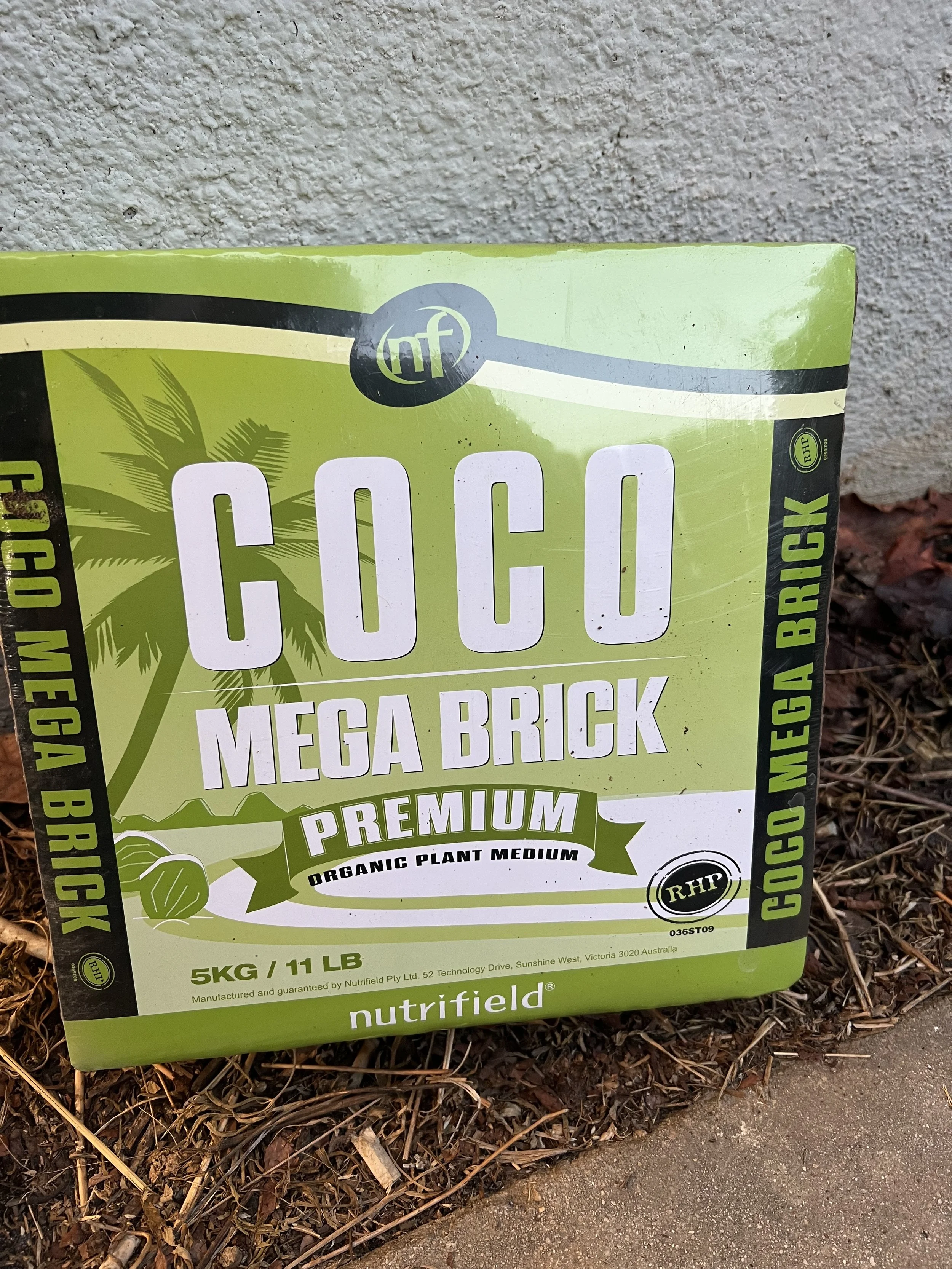
This brand is excellent—one 11 lb (5 kg) block expands up to 2.5 cu ft (18.7 gal) after hydration
Holds up to ten times its weight in water
Provides excellent aeration
Is pH neutral
Gradually releases potassium and phosphorus
Contains natural antifungal properties
These characteristics help create a healthy environment for roots while preventing waterlogged soil.
Peat moss is harvested from peat bogs, ecosystems that take hundreds or even thousands of years to form. Harvesting peat requires draining these bogs, which can disrupt wildlife and damage the surrounding ecosystem. Another issue is that peat moss becomes more acidic over time, which can gradually shift soil pH. For growers who like to reuse and recycle their soil, coconut coir tends to remain more stable over time.
The Importance of Compost in Living Soil
Compost is one of the most essential ingredients in creating healthy, living soil. It introduces beneficial microorganisms and a diverse soil biology that help break down nutrients, improve soil structure, and support strong root systems. These microorganisms work synergistically with your plants, making nutrients more available and helping plants resist stress, pests, and disease.
While compost can be purchased, making your own compost is often the best option. You can easily create high-quality compost by recycling your yard and kitchen waste. This process allows you to control the ingredients and ensure a nutrient-rich, microbe-dense soil amendment. The full composting process is extensive and will be covered in a separate blog post, but even basic homemade compost can transform your soil and your plants.
Locally sourced compost is another excellent option and is often available at little to no cost. Many cities offer green waste compost for free to residents, and nearby farms or ranches are frequently happy to provide composted manure at no charge.
For example, one of my neighbors operates a horse ranch and has been a primary source of aged horse and goat manure mixed with wood chips and straw for years. The combination of this high-quality barnyard compost with my homemade green waste and kitchen compost creates a rich, living amendment that plants thrive on.
One unique benefit of using locally sourced barnyard compost is that it often contains small amounts of local clay soil. Even a little clay in the mix adds structure, minerals, and trace elements that enhance the flavor, potency, and overall health of the plants. This is particularly valuable for cannabis, where soil mineral diversity can have a measurable impact on resin production, terpene expression, and plant vitality.
By incorporating compost into your soil, whether homemade or locally sourced, you are feeding the microbes, the roots, and ultimately the plant itself, creating a strong foundation for high-grade, living soil that supports heirloom, landrace, and modern genetics alike.
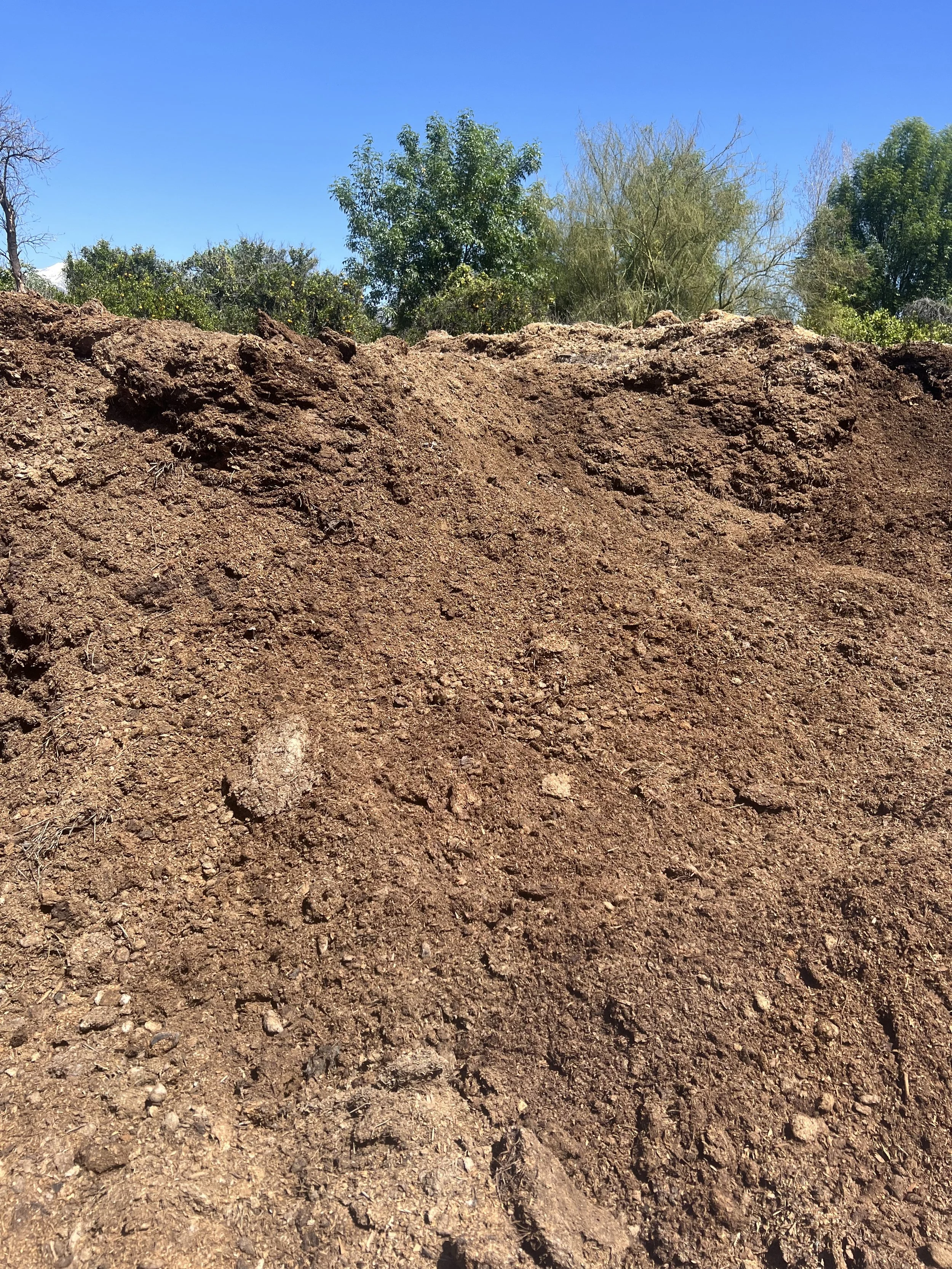
High-quality local compost like this can often be sourced for free and is full of life
The Role of Perlite (and Pumice) in Potting Soil
In addition to a moisture-retaining base like coconut coir, healthy potting soil needs an aeration component. This is where perlite comes in.
Perlite is a lightweight volcanic glass that is heated until it expands. When added to soil, it creates tiny air pockets that improve drainage and root aeration. This prevents roots from becoming waterlogged, reduces the risk of root rot, and encourages strong, healthy root growth.
Perlite also helps retain just enough moisture while allowing excess water to drain away. This balance is critical for seedlings, clones, and young plants, which can easily suffer if their roots sit in water for too long.
If you have access to pumice, it is an excellent alternative. Pumice is a naturally occurring volcanic rock that works similarly to perlite by increasing soil aeration and improving drainage. Unlike perlite, pumice is heavier and more permanent in the soil, making it ideal for long-term containers or outdoor pots where stability and durability are important.
It is important to note that working with perlite requires attention and care. The fine particles can become airborne, so wearing proper respiratory protection is essential. The same precautions apply when working with dry amendments and fertilizers: always protect your eyes and respiratory system by using safety goggles, protective eyewear, and a mask. These safety measures help prevent irritation and ensure a safe and comfortable workspace.
Both perlite and pumice are essential tools in creating a well-structured, living soil that allows roots to breathe, take up nutrients efficiently, and support vigorous plant growth.
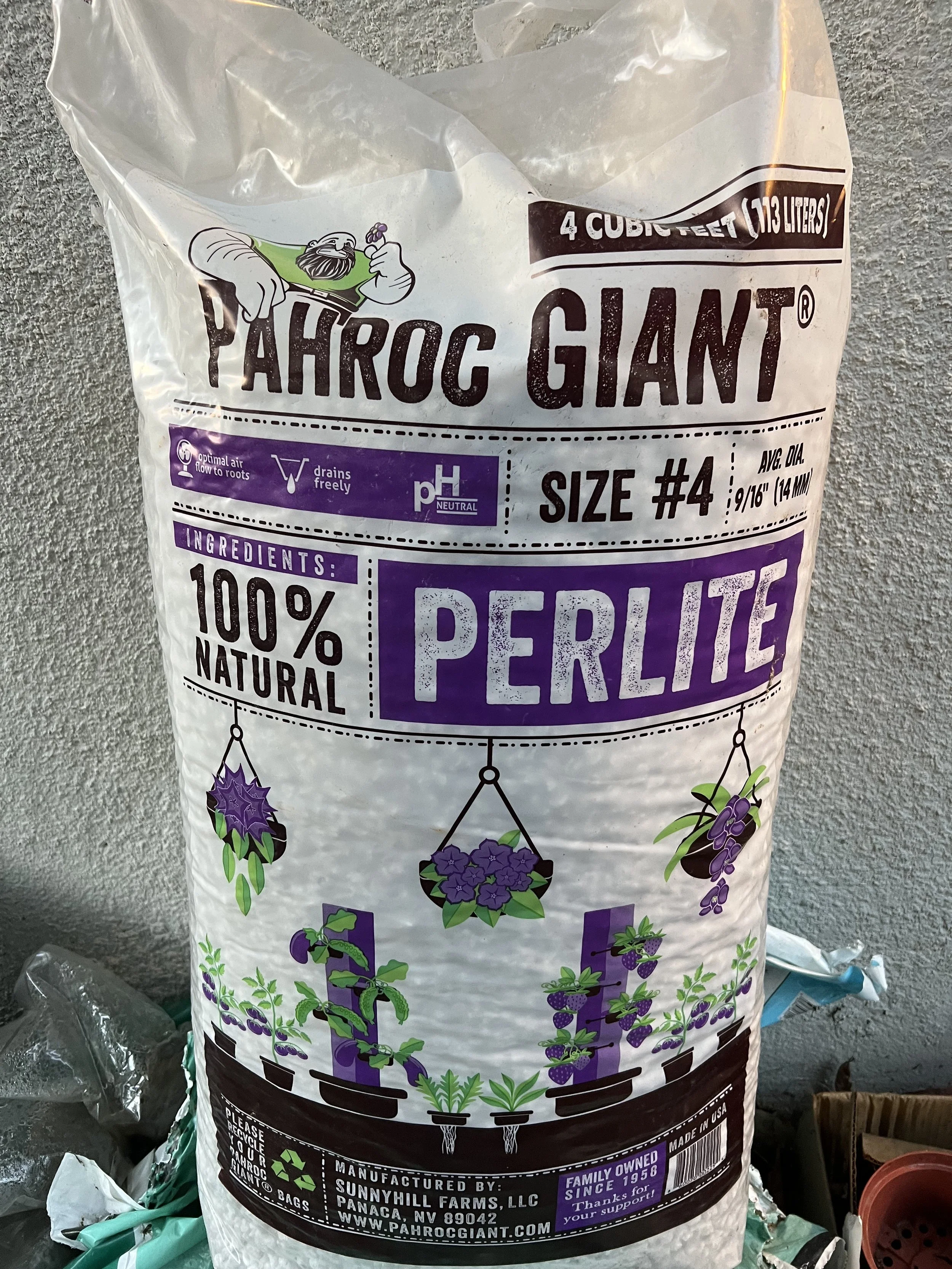
Perlite comes in different sizes— I usually use #3 or #4 for my potting mixes.
My Simple Living Soil Recipe
This is the basic organic potting soil mix I’ve used successfully for many years.
Ingredients:
1 part coconut coir
1 part perlite
1 part high-quality compost
A few large handfuls of worm castings
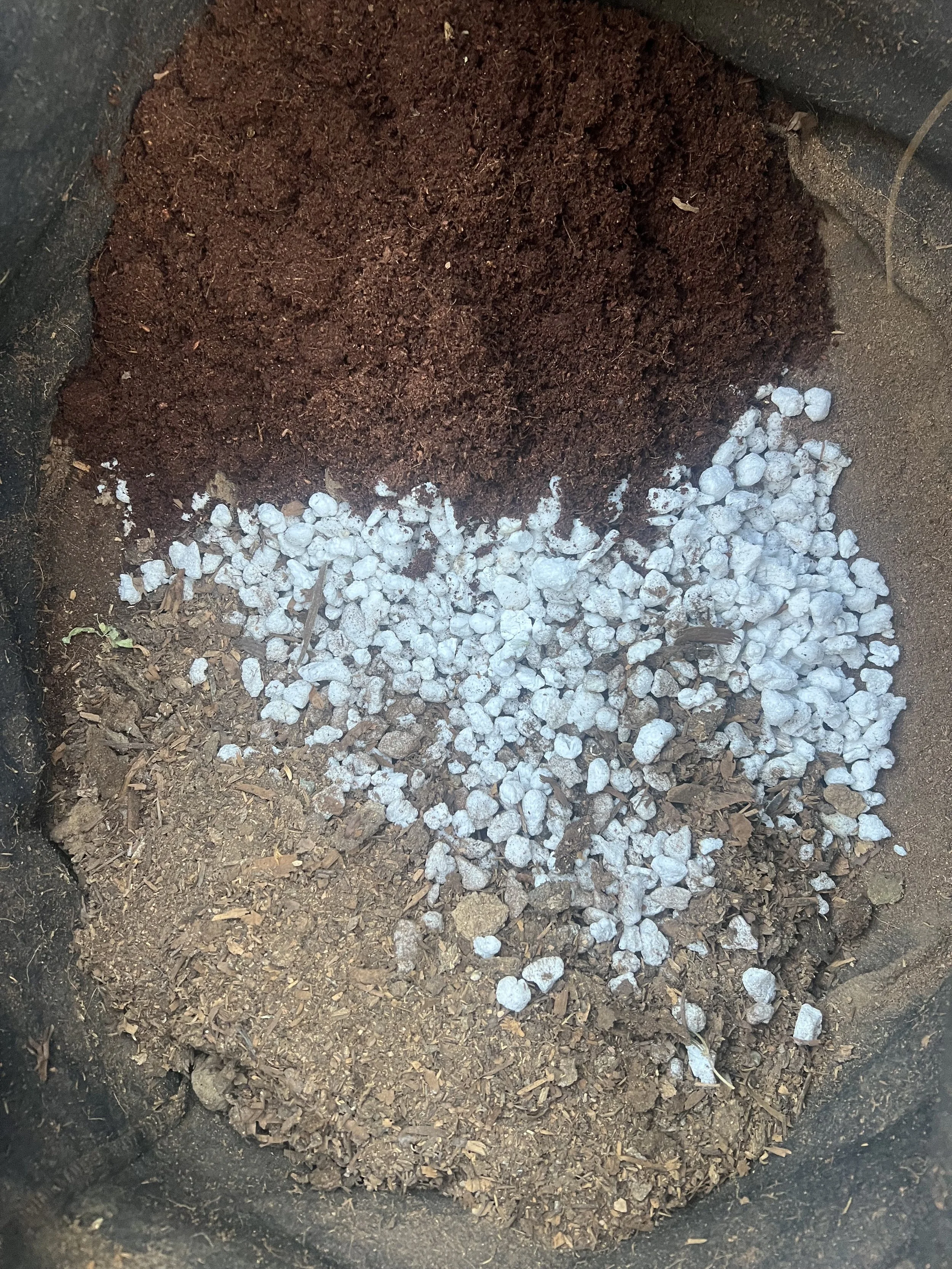
The basics ready to blend: coconut coir, perlite, and compost
This mixture creates a soil that has excellent drainage, good moisture retention, healthy microbial life, and gentle natural nutrition. It works well for starting seeds, rooting clones, supporting young plants, and growing vegetables and herbs. I’ve used this mix successfully for tomatoes, peppers, squash, broccoli, radishes, and many other garden plants.
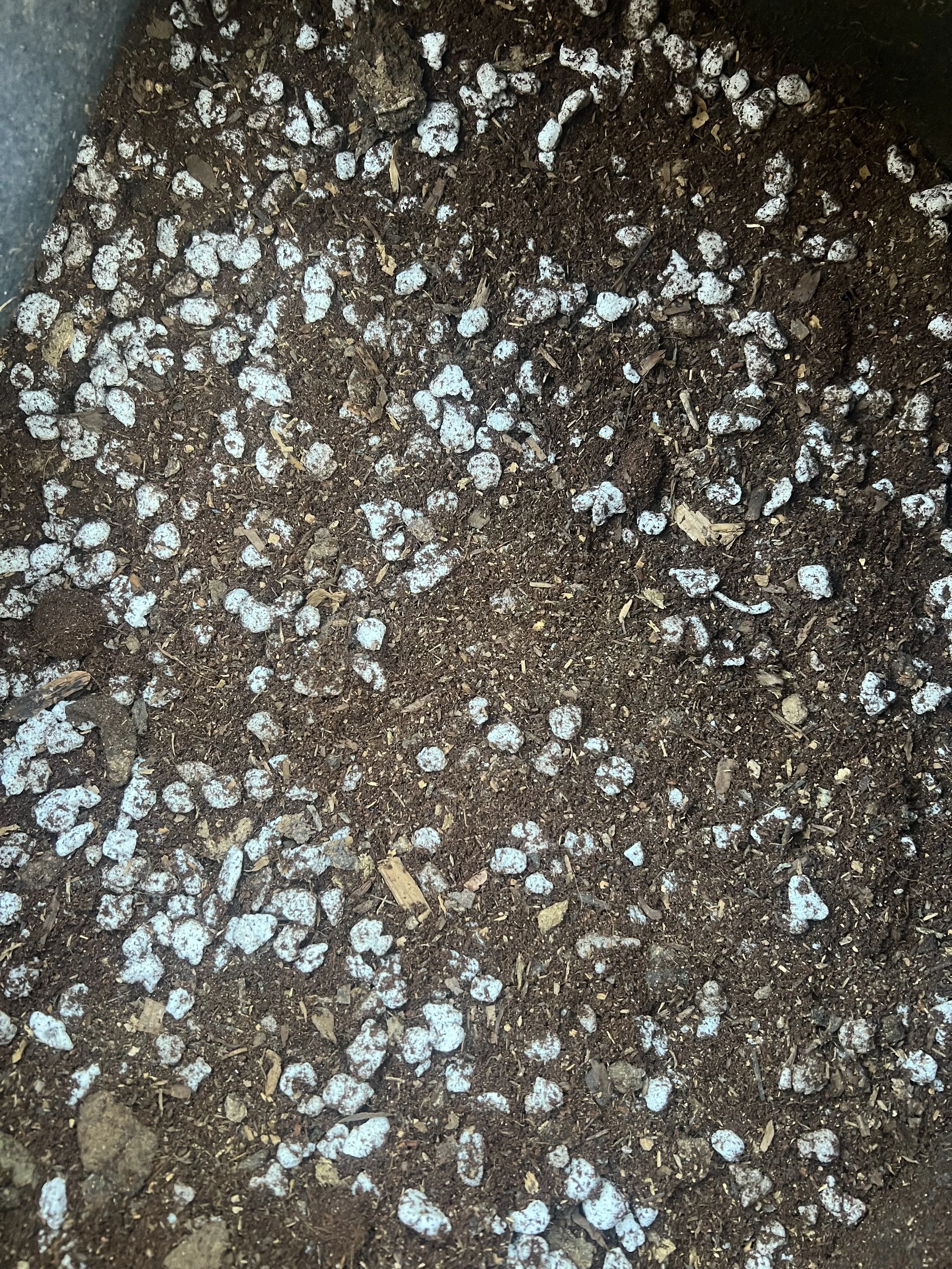
Blended and ready: basic potting mix perfect for seeds, seedlings, and small plants
Adding Nutrients for Larger Plants
For larger plants or for cannabis that will grow through a full life cycle, the soil will need additional nutrients. I often rely on my own fortified compost, which I have spent years developing. However, there are also several excellent premade organic fertilizer blends available that work very well in living soil systems.
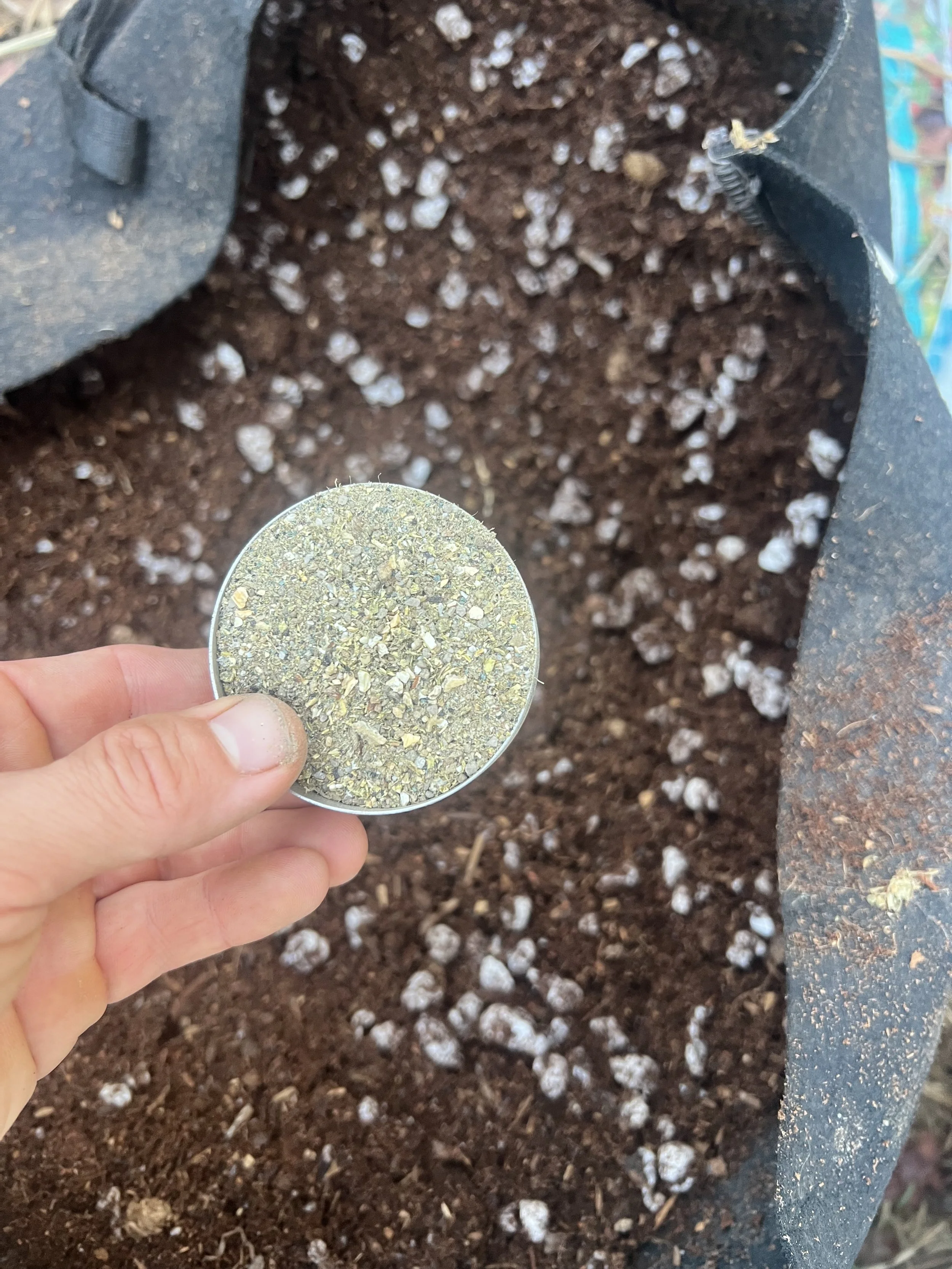
Ready to pour: Down To Earth All Purpose makes feeding your soil easy and effective
Two brands I have used extensively and recommend are Down To Earth and Gaia Green. These fertilizers contain clean organic ingredients and a wide range of natural minerals that help support healthy plant development.
Down To Earth produces several excellent organic fertilizer blends, including All Purpose, Vegetable Garden, Rose & Flower, and Bio-Live. The All Purpose, Vegetable Garden, and Bio-Live blends are especially well suited for vegetative growth, when plants are focused on producing leaves, stems, and strong root systems. Bio-Live also contains additional beneficial microbes and mycorrhizae, which help strengthen the soil’s biological ecosystem.
For growers working with full-cycle cannabis plants, I recommend creating a balanced blend by combining half All Purpose or Vegetable Garden with half Rose & Flower. This provides a broader nutrient profile that supports the plant throughout its entire life cycle. By providing both vegetative and flowering nutrients from the beginning, the soil contains a diverse range of minerals and organic inputs, allowing the plant to access what it needs as it grows. This approach helps support abundant growth, strong resin production, and a flavorful harvest.
Gaia Green fertilizers are another excellent option. Their All Purpose and Bloom blends are mineral-focused and contain ingredients such as fish bone meal, feather meal, alfalfa meal, rock phosphate, seaweed meal, greensand, oyster shell, and gypsum. For full-cycle cannabis, using half Gaia Green All Purpose and half Gaia Green Bloom provides a balanced spectrum of nutrients that supports both vegetative growth and flowering. This ensures the soil contains the full range of nutrients needed throughout the plant’s entire life cycle, producing abundant, potent, and flavorful harvests.
For a simple soil recipe, add one tablespoon of fertilizer per gallon of potting mix. For larger plants or long-term containers, you can also add slightly more fertilizer toward the bottom of the pot, allowing roots to gradually grow into richer nutrients as the plant matures.
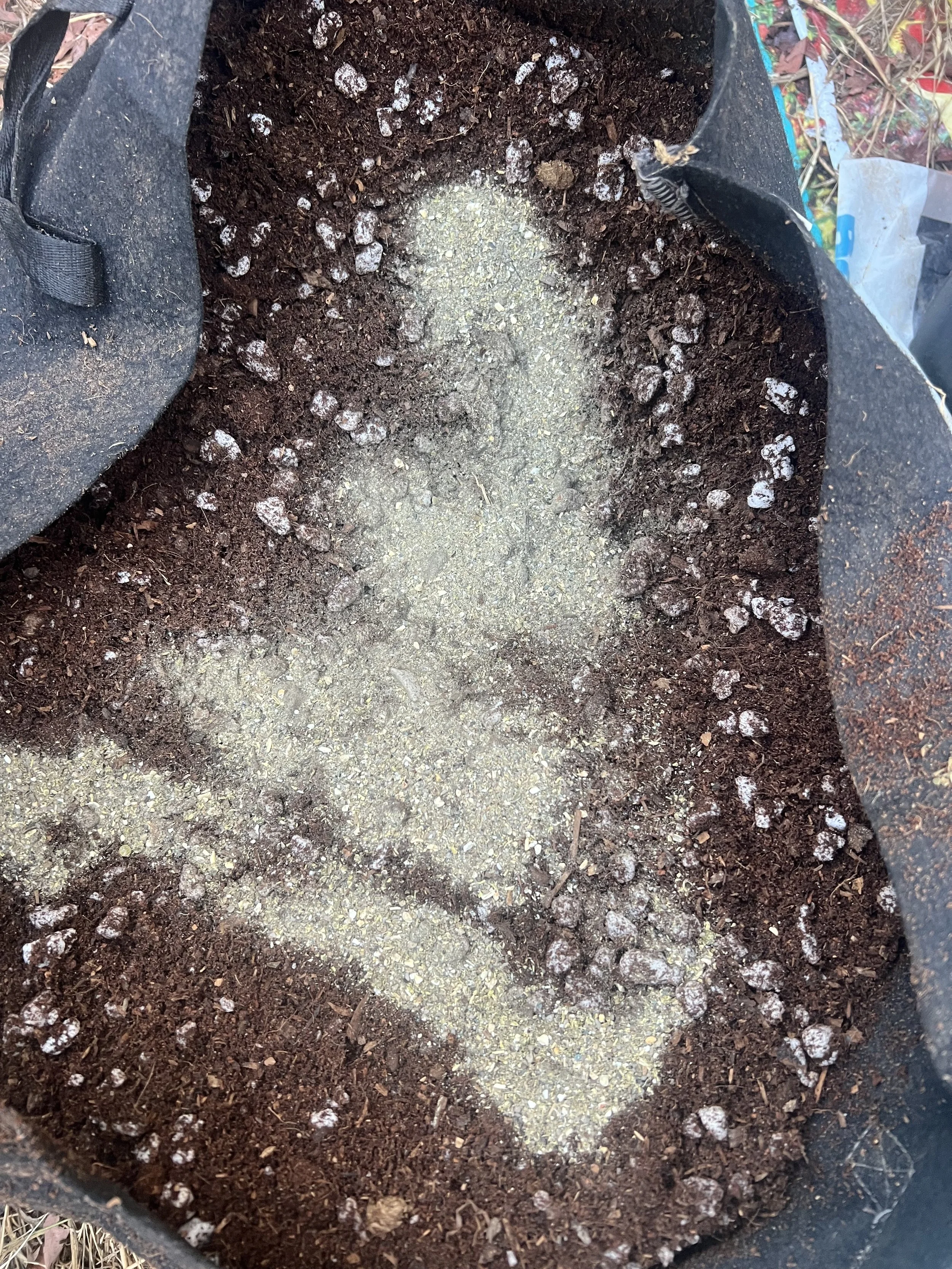
A fresh layer of fertilizer—time to blend it into the potting mix
Letting Your Soil Rest Before Planting
After mixing your soil and amendments, it is best to moisten the soil and allow it to sit before planting. This process allows microbes to begin breaking down nutrients so they become available to the plant.
Steps:
Mix all ingredients thoroughly
Moisten the soil with clean water
Allow it to rest for 1–4 weeks (30 days is ideal)
This resting period prevents the soil from being too “hot,” which could damage seedlings or clones. Once it has rested, your soil will be biologically active and ready for planting.
Final Thoughts
Learning to build healthy soil is one of the most important skills a grower can develop. When your soil is alive with microbes, organic matter, and balanced minerals, plants can grow naturally and express their full potential.
For growers working with landrace and heirloom cannabis genetics, this becomes even more important. These ancient varieties often respond best to balanced living soil rather than aggressive synthetic feeding. High-quality living soil is the foundation for truly high-grade medicine. Healthy soil produces healthy plants, and healthy plants produce the most refined, flavorful, and potent harvests.
With just a few simple ingredients, you can create a rich, living foundation that supports strong plants and exceptional medicine.
